
Choosing a Garage Floor Coating: Epoxy, Polyaspartic, Paint-On Kits and More
Epoxy, polyaspartic, kits, flakes, solid colors and stone looks: what each one is, where it shines, and why prep matters more than the product name.
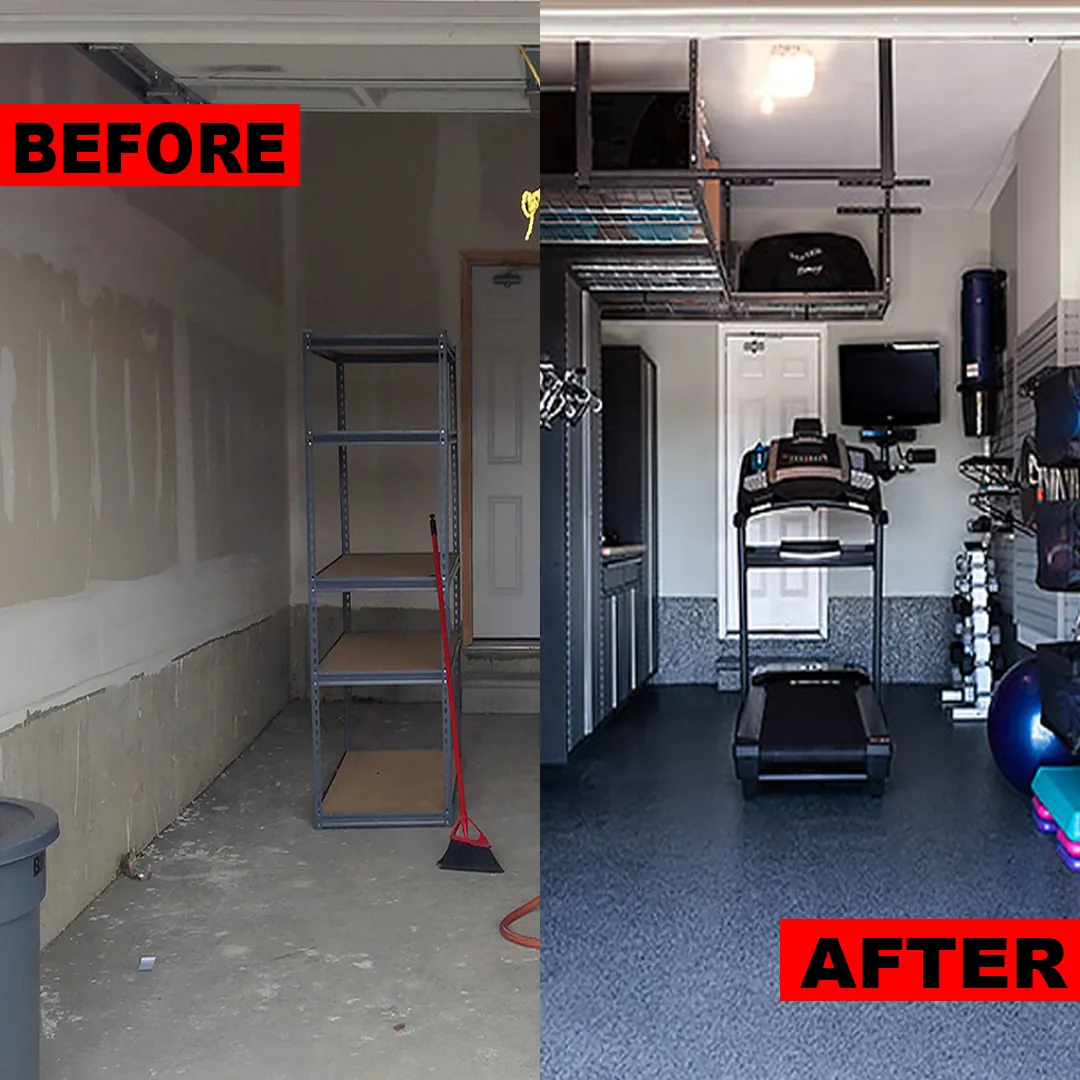
Walk into any home improvement store or scroll through a few websites and the options for a garage floor can feel endless: epoxy, polyaspartic, polyurea, one-day systems, paint-on kits, flake floors, quartz floors. The names sound similar, the claims overlap, and it is hard to tell what actually matters.
This guide breaks the choices into plain language. We will cover what each option is, what it is good at, where it falls short, and the factor that matters more than any of them. We do not name brands here, and we are not going to claim one product is perfect for every garage, because it is not.
The short version
Preparation matters more than the product. A well-prepared slab with a sensible coating beats an expensive coating on a poorly prepared slab almost every time.
Epoxy
Epoxy is a two-part coating, a resin and a hardener, that bonds to concrete and forms a hard, durable surface. It is the most familiar option and has a long track record in garages, warehouses and shops.
- Strengths: strong bond when the slab is properly prepared, good resistance to oil and many household chemicals, a wide range of colors and finishes, and a smooth surface that wipes clean.
- Limits: standard epoxy can yellow or look chalky over time when exposed to strong sunlight, which matters for garages with a lot of direct sun through doors or windows. It is also often used as a base layer rather than the final protective layer.
Polyaspartic and polyurea topcoats
These are a different chemistry from epoxy. They are most often used as a clear topcoat over a colored base or a flake layer. You will sometimes see them marketed as a complete system, but in many garages they work best as the top layer of a combination.
- Strengths: generally better UV stability than epoxy, so they resist yellowing in sunny garages, and they are known for good abrasion and chemical resistance.
- Limits: they can be more demanding to apply because some formulations set up quickly, which gives the installer less working time. That makes the skill of the installer important. The materials also tend to be a bigger part of the overall project.
Many professional systems pair an epoxy base for adhesion and build with a clear topcoat for protection. Whether that makes sense for your garage depends on sun exposure, how you use the space and what finish you want.
Paint-on kits
Hardware-store kits are sometimes called epoxy, but they are typically thinner water-based or lightly formulated products. They are inexpensive to try and easy to find.
- Strengths: low upfront effort and cost, and good for a temporary refresh or a low-use space.
- Limits: they are usually much thinner than professional systems and often struggle with hot-tire pickup, where heat from tires softens the coating and lifts it off the slab. They can also wear faster in high-traffic garages.
Kits depend heavily on how well the concrete was prepared, and the prep they call for is often lighter than what a professional would do. If your garage sees daily use, it is worth knowing that going in.
Finish styles: solid, flake and stone-look
Once you choose a general type of coating, you also choose how it looks and feels. This is a design decision as much as a technical one.
Solid color
A smooth, single-color finish. It looks clean and modern, and it makes a garage feel bright. The tradeoff is that it shows dust, footprints, tire marks and scratches more readily, especially in darker colors. It can also be slick when wet unless an anti-slip additive is used.
Flake
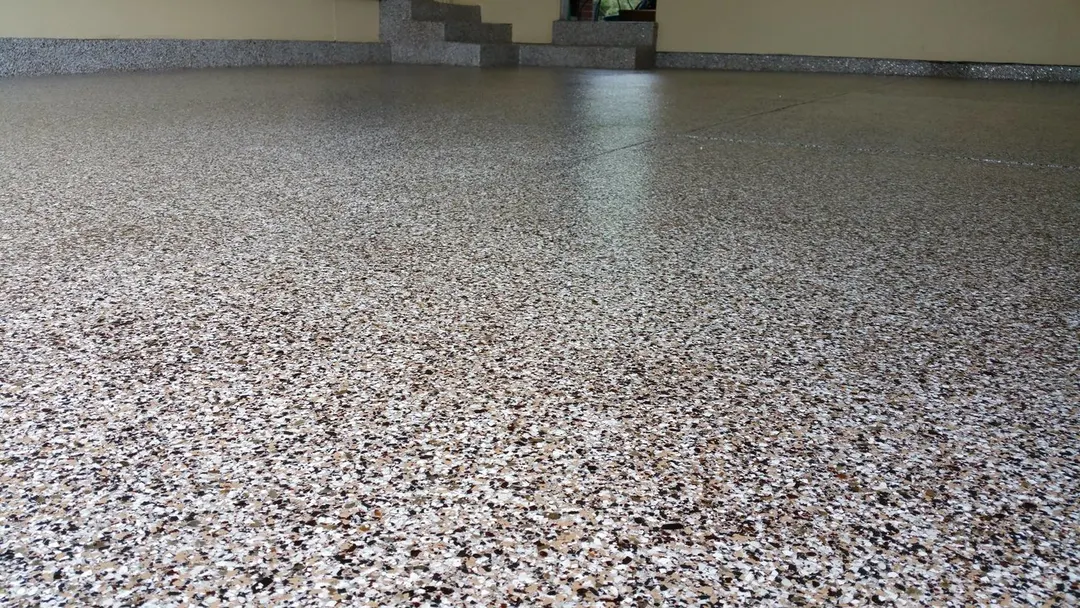
Vinyl flakes in blends are scattered over a colored basecoat, then sealed with a clear layer. This is a popular choice in South Florida because the pattern hides dirt and small imperfections, the texture offers some grip, and the result looks finished. You can choose blends that match your cabinets, car or garage door. The look is varied, and it takes less effort to keep looking good between cleanings. You can see examples on our garage floor epoxy page.
Stone-look or quartz
A heavier, more textured system that resembles natural stone. It can be very durable and attractive, and the texture adds grip. The tradeoffs are that it typically takes more material and steps, and the textured surface can be a little harder to wipe than a smooth one.
Common concerns, in plain terms
UV and sunlight
If your garage door faces the afternoon sun or you leave it open often, UV exposure matters. Some coatings are more prone to yellowing than others. A UV-stable topcoat is a good conversation to have with your installer.
Hot-tire pickup
When a car has been driven and parked, hot tires can pull on weakly bonded coatings. This is more of a bond and preparation issue than a flaw of one product type. It is one reason surface preparation and proper installation matter so much, particularly in warm climates.
Slipperiness
Smooth coatings can be slippery when wet, such as after a rainy day when you pull in the car. Flake systems and anti-slip additives can improve grip. If anyone in your home has mobility concerns or you use the garage as a workshop, bring it up when you request an estimate.
Looks and long-term appearance
Think about how the floor will look after a year of use, not just on day one. Busy patterns, medium tones and flake finishes tend to hide wear better than glossy solid colors.
Why prep matters more than the product
A coating can only be as strong as its connection to the concrete. If the slab is dusty, oily, sealed with an old product or weak at the surface, even the most advanced coating can fail. This is why professional installers focus on diamond grinding, crack repair and proper cleaning before anything is applied.
Moisture is another factor in our climate. Humid conditions and damp slabs can interfere with adhesion. A careful installer will look at the floor, ask about its history and explain how they plan to address it. For more on how preparation shapes pricing, read our post on garage epoxy floor cost factors.
A quick way to narrow it down
- How much direct sun does the floor see? More sun makes UV stability more important.
- How do you use the garage? A daily-driver car, a gym or a workshop each put different demands on the floor.
- What look do you want? Smooth and modern, or textured and forgiving?
- How long do you want it to last? A temporary refresh and a long-term investment are different goals.
- How is the slab? Cracks, stains, old coatings and moisture all influence the right system.
Gyms, workshops and storage garages
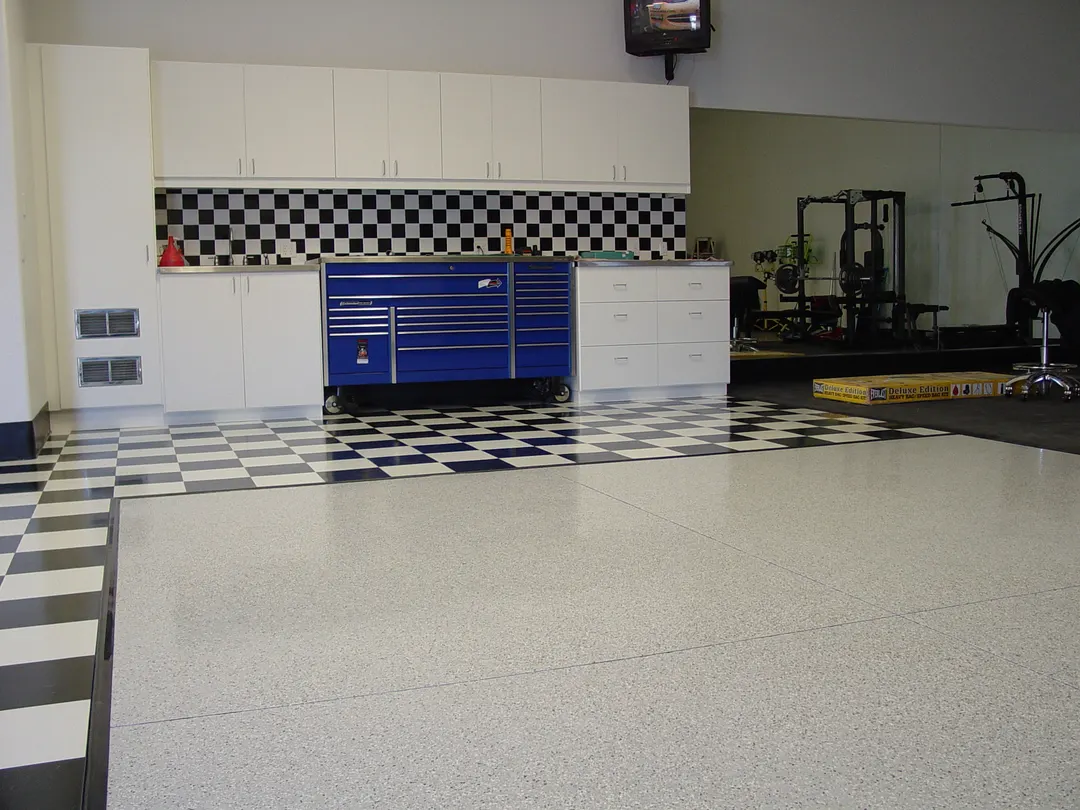
More South Florida garages now double as home gyms, workshops and storage rooms. A floor that handles dropped weights, rolling toolboxes and spills needs a system built for impact and abrasion, and often a bit of texture for safe footing. If you are planning a gym, mention the equipment you will use so it can be considered in the recommendation.
If your plans extend outdoors, patios and pool decks have their own coating needs, covered on our patio and pool deck coatings page. Outdoor surfaces face constant sun and water, which changes what works.
What we recommend, and how
We do not believe in one answer for every garage. During your estimate we will recommend a system for your floor and explain why, based on the slab condition, sun exposure, how you use the space and the look you want. You will know what is included, how we prepare the floor and what to expect afterward. When it is done, our guide on caring for coated floors and sealed pavers helps you keep it looking good.
Estimates are free, and we reply within 1 business day.