
What Drives the Cost of a Garage Epoxy Floor in South Florida
Two quotes for the same garage can look nothing alike. Here is what actually moves the number, and how to compare estimates so you are judging like with like.
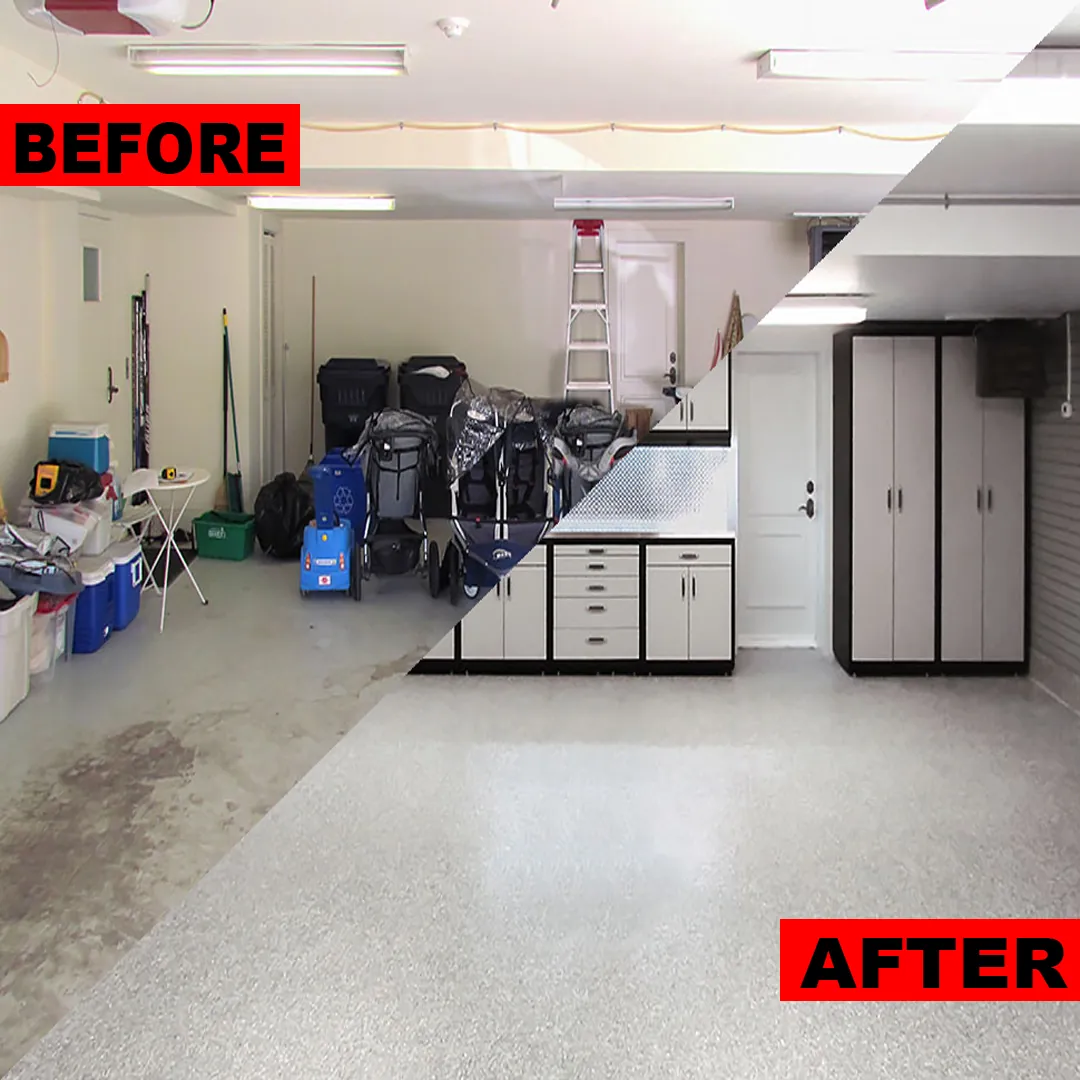
If you have collected two or three quotes for a garage floor coating, you have probably noticed they do not line up. One is much shorter than the next, one lists steps the others skip, and it is hard to tell whether you are comparing the same job. That is normal. A garage floor is not a commodity, and the final number depends on a handful of factors that vary a lot from one garage to another.
We are not going to put numbers in this post, because a fair price can only come from looking at your actual slab. What we can do is explain what moves the price up or down, so you can ask better questions and understand what any estimate is really telling you.
1. Size and layout of the floor
The most obvious factor is square footage. A one-car garage and a three-car garage with a workshop bay are very different amounts of material and labor. Layout matters as well. A wide open rectangle is faster to prep and coat than a floor broken up by steps, columns, utility closets or built-in cabinets, because more edges mean more careful work with grinders and brushes.
Ceiling height and access play a smaller role, but they can change how equipment is moved in and out. If the garage is attached to a townhome with limited driveway space, that is worth mentioning when you request an estimate.
2. The condition of your slab
This is where quotes diverge most. Concrete that is smooth, dry and crack-free is the easy case. Real garages often have hairline cracks, larger cracks, spalled or pitted areas, old paint or sealer, oil saturation, and expansion joints. Each of these needs attention before a coating goes down, and each takes time and material.
- Cracks and divots usually need to be filled or repaired so they do not telegraph through the finished floor
- Old paint, sealer or failed coatings must be removed, because a new coating is only as strong as what it bonds to
- Oil and grease contamination can prevent adhesion if it is not dealt with
- Uneven or damaged areas may need patching before anything else happens
A contractor who looks closely at the slab and tells you honestly what condition it is in is doing you a favor. A quote that never mentions the condition of the concrete is a quote that may change later.
3. Moisture, which is a real South Florida issue
Our climate is humid, rainy for a good part of the year and, in coastal areas, salty. Concrete slabs, especially older ones or those without a good vapor barrier beneath them, can let moisture vapor move upward through the floor. Trapped moisture is one of the common reasons coatings bubble or peel.
Not every garage has a moisture problem, but it is a fair question to ask. A careful contractor will look for signs, explain what they find and describe how they plan to deal with it. If one quote addresses moisture and another ignores it entirely, they are not offering the same job.
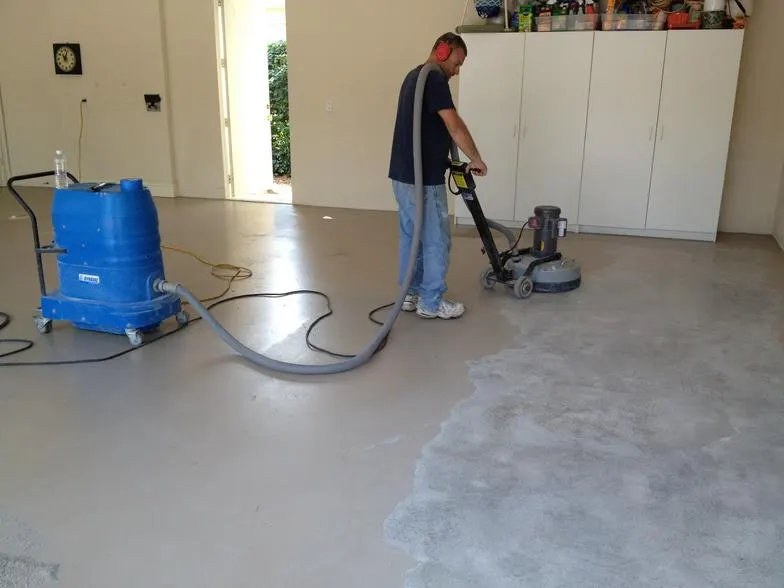
4. Surface preparation, the part you do not see
Preparation is where a lot of the effort, and a lot of the long-term result, lives. The professional approach is diamond grinding. A grinder with diamond tooling removes the weak surface layer and opens the concrete so the coating can grip. It also levels small imperfections and removes many old contaminants.
Acid etching, sometimes sold as a shortcut, is less consistent and often leaves a surface that is not as well prepared. Skipping real prep may lower a quote, but it tends to show up later as peeling, especially under hot tires. When you compare estimates, ask each contractor how they prepare the floor. If the answer is vague, that tells you something.
5. The coating system itself
Not all coatings are the same product. Some systems are a single coat, others are multi-layer. A typical high-quality system might include a primer or base coat, a decorative layer and a clear protective topcoat. The materials chosen and the number of layers affect both durability and cost.
Thickness is another variable. A thin coat is quicker to apply and cheaper in materials, but it may not hold up to heavy use. A thicker system generally protects better but takes more material and more labor. If you are not sure what you need, our guide to choosing a garage floor coating compares the main options in plain terms.
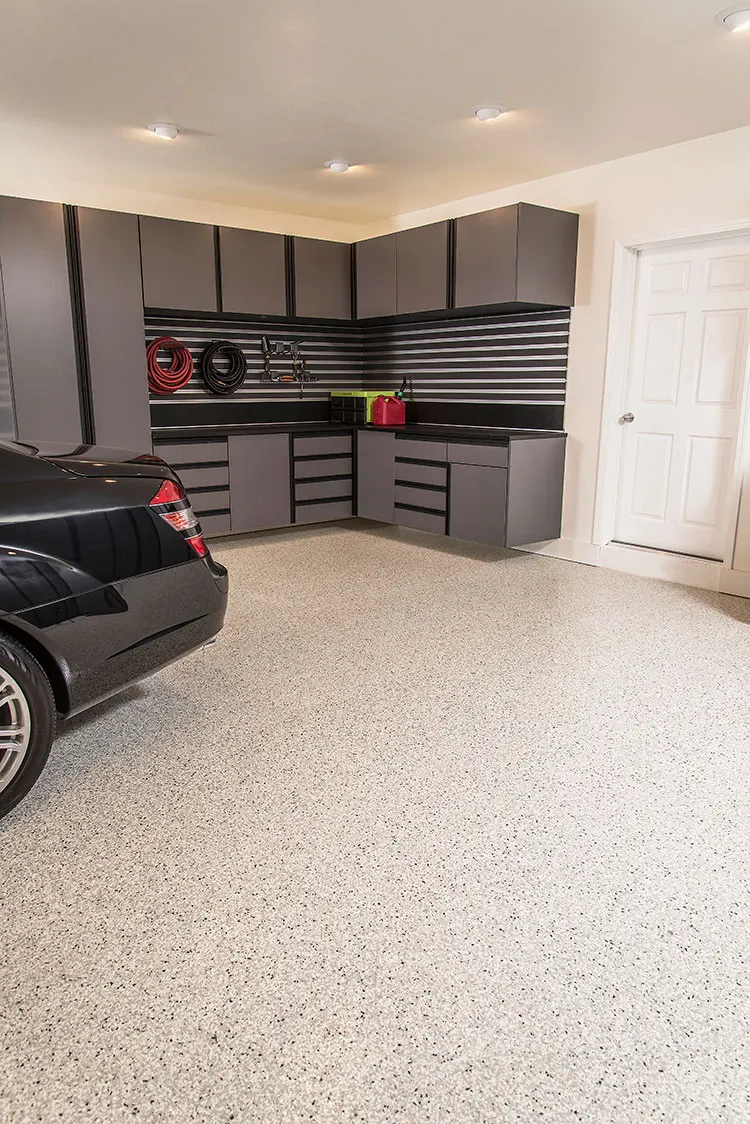
6. Finish style: flake, solid color or stone-look
The look you choose affects the price because each finish requires different materials and steps.
- Solid color is the simplest. It gives a clean, uniform look, though it shows dust and marks more easily than a patterned floor.
- Flake systems use vinyl flakes in blends broadcast over a colored basecoat. They add texture, hide dirt and imperfections and give the floor a finished look. More coverage and more layers generally mean more material and time.
- Stone-look or quartz-style finishes are typically a more involved system with a distinct, durable texture. They can look great, and they usually mean more material and more steps.
If you are leaning toward a flake floor, our garage floor epoxy page shows the blends and how the process works.
7. Extras that change the scope
Some add-ons are easy to forget until they appear on a quote. Ask whether any of these are included, because they can change the final number.
- Stem walls or short walls around the garage perimeter, which may be coated for a more finished look
- Cove base, where the coating curves up the wall edge to create a seamless, easy-to-clean transition
- Steps or landings leading into the house
- Extra topcoat layers for added protection or a different sheen
- Anti-slip additives, which are a good idea in some spaces
- Repairs to expansion joints or control joints
8. Moving items out and getting started
The floor has to be clear before anyone can work on it. If you can empty the garage yourself, that helps. If you need help moving heavy shelving, workbenches or gym equipment, make sure that is discussed in advance and included in the plan. It is also worth talking about where your items will go during the work, since the floor will need time before it is used again.
9. Timing and the South Florida calendar
A garage is semi-outdoor space. High humidity, afternoon storms and extreme heat in summer can influence scheduling and how materials behave. A contractor who plans around the weather instead of ignoring it is protecting the result. If you have a deadline, such as an upcoming event, let them know early so the schedule can be built with it in mind.
How to compare quotes fairly
The easiest way to compare estimates is to make them answer the same questions. Before you decide, ask each contractor for the following in writing, or at least in a clear conversation.
- How will you prepare the floor, and with what equipment?
- How will you handle cracks, old coatings, oil stains and moisture?
- What coating system are you proposing, and how many layers does it include?
- What finish style is included, and how much flake or decorative coverage?
- Are stem walls, cove base, steps and joint repairs in or out of scope?
- Who moves the contents of the garage, and what is expected of me?
- What do you recommend for upkeep after the job?
A low quote is not automatically a bad one, and a high quote is not automatically better. What matters is whether the scope, preparation and system are clearly described and match your floor.
Pay attention to how each contractor talks to you. Someone who walks the garage, looks at the slab, asks how you use the space and explains their reasoning is usually giving you a more reliable estimate than someone who quotes from a phone photo and a square-foot figure.
What we do at an estimate
During your estimate we look at the slab, ask how you use the garage, and recommend a system for your floor, explaining why. We cover preparation, finish choices and any extras so you know what is included. Estimates are free, and we reply within 1 business day. If you also have pavers or a pool deck on your list, we can look at those at the same visit, and our post on caring for coated floors and sealed pavers explains how to keep everything looking good afterward.